How to Sell Your Texas Home Fast After Moving Out and Avoid Foreclosure
How to Sell Your Texas Home Fast After Moving Out and Avoid Foreclosure
Sell Your Texas Home Fast After Moving Out and Avoid Foreclosure
Texas homeowners facing foreclosure often learn the hard way that selling a home after moving out gets expensive fast. Once relocation stress management turns into daily damage control, every extra week can bring more carrying costs, more missed mail, and more uncertainty. The core tension is brutal: an urgent home sale needs speed and clear decisions, but financial stress and foreclosure risk make everything feel urgent at once. With the right focus, it’s possible to regain control of the timeline and make a clean break.
Quick Summary: Sell Fast After Moving Out
● Focus on remote home selling strategies to move quickly before late fees and foreclosure pressure grow.
● Compare cash offer benefits to prioritize speed, certainty, and fewer sale hurdles.
● Consider leaseback-style sale options to gain flexibility while finalizing your next housing steps.
● Follow a quick home sale process with clear, timely steps to keep the transaction moving.
● Use foreclosure prevention tips to act early and protect your options when time is tight.
How to Sell a Vacant Texas Home from Afar
This process helps you sell your vacant Texas home quickly after you’ve moved, even if you need a fast cash offer or flexible terms to prevent foreclosure. The goal is to protect the property, price it realistically, run the sale remotely, and close without last-minute surprises.
1. Secure and “stabilize” the vacant property
Start by changing exterior locks if needed, setting lights on timers, pausing mail, and keeping utilities on for showings and inspections. Arrange recurring lawn care and a basic weekly check-in so the home doesn’t look abandoned. A clean, maintained vacancy reduces buyer objections and helps appraisers and inspectors get in and out smoothly.
2. Prep for remote showings with a minimal refresh
Declutter, deep-clean, and handle only high-impact fixes like leaks, broken fixtures, or damaged flooring. Hire a photographer and request a 3D tour or video walkthrough so buyers can evaluate the home without you being there. Plan for multiple showings, since 10 to 25 showings is often what it takes to reach a signed contract.
3. Choose your sale path and set a timeline
Decide whether you’re pursuing a traditional listing, a cash offer, or a flexible option like a short rent-back if you need extra time. If foreclosure risk is on the table, ask your lender for the exact reinstatement amount and deadline, then work backward to pick the fastest realistic route. Your timeline should drive your pricing strategy and how aggressively you market.
4. Market and negotiate remotely with tight communication
Pick one point person, usually your agent or transaction coordinator, to manage showings, feedback, and offers while you approve decisions by phone and email. Review each offer against your timeline, requested repairs, and the buyer’s ability to close quickly, not just the headline price. Keep digital copies of the deed, loan payoff info, HOA documents, and utility notes ready so you can respond fast.
5. Close cleanly and shut down carrying costs
Confirm the net sheet early and budget for 5-10% of the home sale price that sellers often pay in closing-related costs, which can affect how much cash you walk away with. Ask your title company about remote notarization or mail-away signing, and schedule final walk-through access for the buyer. After the deed records, cancel homeowners insurance so you stop paying for coverage you no longer need.
Fast-Sale Options Compared
Texas homeowners selling after moving out often need two things at once: speed and a clean path to stop foreclosure pressure. The table below compares common quick-sale routes so you can balance closing time, certainty, and likely net proceeds without guessing.
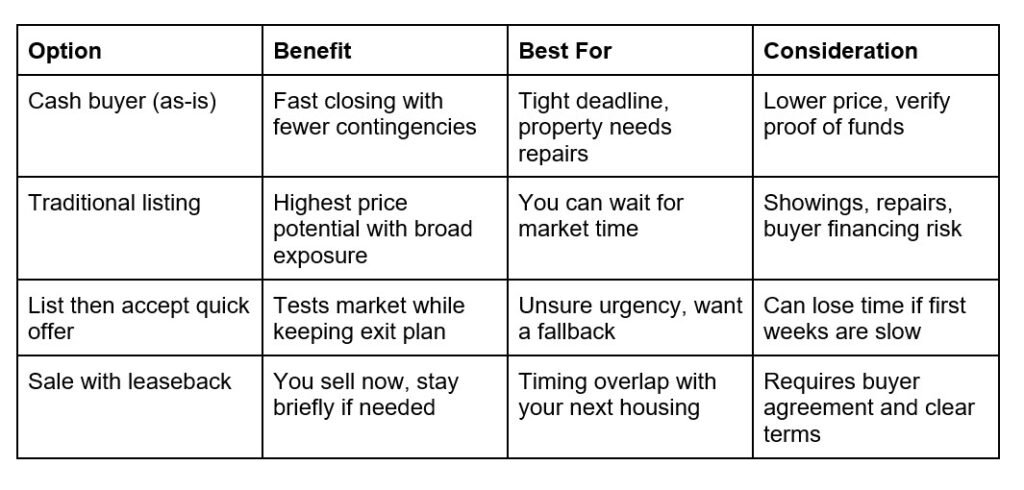
If foreclosure timing is short, certainty and speed often matter more than squeezing every dollar. If you have breathing room, a listing or hybrid approach may improve your bottom line. Knowing which option fits best makes your next move clear.

Remote Home Sale Questions, Answered
Q: How can I sell my home quickly and efficiently after I’ve already moved out?
A: Start by confirming your foreclosure timeline with your lender or servicer, then pick a closing target date you can realistically meet. If time is tight, prioritize an as-is sale path that limits repairs and buyer financing delays, and gather your payoff statement, HOA info, and recent utility history early. Keeping everything in one shared folder helps you respond fast from anywhere.
Q: What are some cost-effective ways to prepare a vacant home for sale to attract buyers?
A: Focus on safety and obvious condition issues first, then cleanliness and lighting. Simple fixes like replacing bulbs, rekeying locks, mowing, and a deep clean often outperform expensive upgrades when speed matters. Address common deal stoppers like missing handrails, active leaks, and non-working utilities so buyers feel confident.
Q: How do I handle showings and inspections when I no longer live in the house?
A: Use a local agent, trusted friend, or licensed property manager to coordinate access, then install a lockbox and a basic camera system that respects showing rules. For inspections, request a clear photo report and ask for repair requests in writing with deadlines. If you are aiming to avoid foreclosure, set a firm “decision window” so negotiations do not drag on.
Q: What strategies can reduce the stress and uncertainty of managing a home sale from a different location?
A: Shrink decisions into a short checklist: timeline, minimum net proceeds, and the few flexible terms you need, such as delayed move-out for belongings or a specific closing date. Ask every buyer or agent to confirm those terms in writing before you accept anything. It can also help to remember that foreclosure pressure is common, with foreclosure starts rising in the first quarter of 2025, so acting early is a strength, not a failure.
Q: How can having a structural home warranty help protect my investment and reassure buyers when selling a home I’ve already left?
A: For a newer build, a structural home warranty can reduce buyer anxiety about big hidden defects, which may help keep the deal moving while you are out of town. It also gives you a clearer way to respond if concerns come up during due diligence. If your home is newer, review a Texas structural warranty explainer, click here for more information on what is covered and what is not.
Conclusion: Pick a Fast Texas Sale Path and Set a Firm Closing Target
Moving out while the mortgage clock keeps ticking can make selling in Texas feel like a race you can’t control, especially with relocation stress and foreclosure pressure piling on at the same time. The steady approach is to choose the fastest workable option for your situation, lean into the flexible sale paths available to you, and keep decisions simple so the process stays moving.
That means picking one path, setting a real closing target date, and confirming it in writing with everyone involved within the next 24 hours. Not next week. Today. The homeowners who come out of this kind of situation with the least damage are rarely the ones who got the highest offer. They’re the ones who made a clear decision early and pushed every step toward the finish line without letting uncertainty stall them.
You don’t need a perfect sale. You need a clean one. Protect your credit, cut the carrying costs, and give yourself the breathing room to move forward. The next chapter is waiting, and the fastest way to get there is to stop managing a property you’ve already left behind.
How to Sell Your Texas Home Fast After Moving Out and Avoid Foreclosure | OutFactors – Dallas Fort Worth, TX