
How to Organize Shoes, Bags, and Clothes in a Tiny Home
How to Organize Shoes, Bags, and Clothes in a Tiny Home
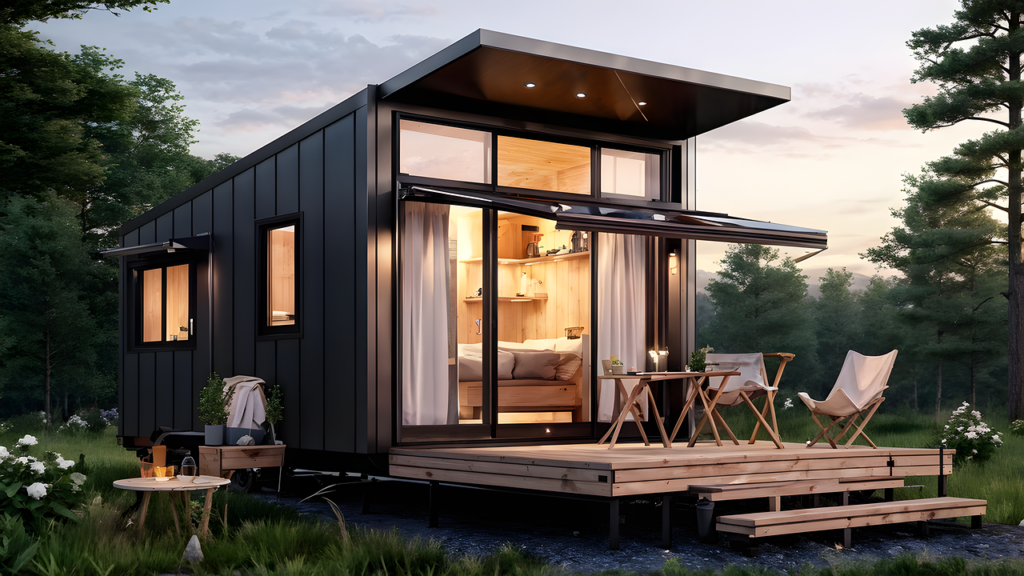
Organizing Your Tiny Home
Living in a tiny home comes with a unique set of storage challenges. With a few hundred square feet at most, it’s easy to feel that your belongings are taking over. The key is to make use of every inch, including the ones you don’t usually notice.
When space is at a premium, creative solutions are essential. By rethinking how you store and organize your items, you can improve the functionality of your whole home. From shoes and bags to clothes and accessories, everything can have a place, keeping your tiny home tidy and inviting.
The benefits go beyond looks. A clutter-free home can mean less stress, more productivity, and a greater sense of well-being. With the tips below, even the smallest tiny home can feel cozy, open, and efficient.
Why Organization Matters in a Tiny Home
In a tiny home, every square foot counts. Without good organization, clutter builds up quickly, and because your living, sleeping, and working areas often overlap, mess in one spot affects the entire space. Searching for misplaced items wastes time and adds frustration.
A well-organized tiny home also improves your quality of life. A tidy environment supports mental clarity and focus, helping you relax and recharge. And if your tiny home is on wheels, organization is also about weight distribution and safety, since heavy items need to be stored low and secured for travel.
Finally, organized spaces give you a sense of control and calm. When everything is neatly arranged and easy to reach, a small footprint feels spacious rather than cramped.
Assessing Your Space: Inventory and Prioritization
Before you organize, take stock of what you own. List your shoes, bags, clothes, and other personal items, and sort each by how often you use it and how important it is to you. In a tiny home, this is also the time to be honest about what you really need to keep.
Next, prioritize. Decide which items need easy access and which can be stored away for occasional use. Everyday items should be within reach, while off-season or special-occasion pieces, such as formal dresses, can go in harder-to-reach spots.
Then look at your layout for storage opportunities: closets or wardrobe nooks (even a small one can be split into zones for casual and formal wear), shelves, loft areas, stair risers, and the space under your bed or sleeping platform. Knowing your limits helps you build a plan that fits your home.
Expert Tips for Organizing Shoes in a Tiny Home
Shoes can quickly clutter a small floor plan. Try these ideas:
- Compact Shoe Racks and Wall Shelves: Use a slim rack or wall-mounted shelves to keep shoes off the floor. Some shoes, like leather loafers, need extra care, so give them a spot with good airflow. Adjustable shelves help fit different sizes and styles.
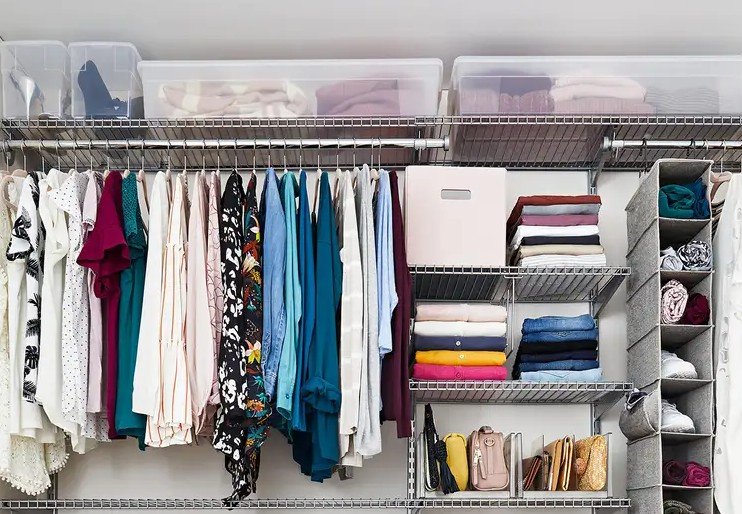
- Under-Bed or Platform Storage: If your bed sits on a platform or in a loft with a base, use the space beneath for clear plastic containers or fabric bins. This keeps shoes out of sight and protects them from dust.
- Door Organizers: Hang an over-the-door shoe organizer to use vertical space. Clear pockets make it easy to see what you have.
- Entryway Cubbies: Keep only the shoes you wear daily by the door, and store the rest elsewhere.
These strategies keep your shoes accessible while freeing up valuable floor space.
Creative Solutions for Bag Storage in Small Spaces
Bags clutter a tiny home just as easily as shoes do. Consider these options:
- Hooks and Hangers: Wall hooks or hangers store bags vertically, saving space and making it easy to grab one on the way out.
- Shelf Dividers: Add dividers to closet or wall shelves to give each bag its own spot and keep them from toppling or losing shape.
- Stackable Bins: Store smaller bags and clutches in stackable bins or baskets. Label each so you can find what you need without digging.
With these ideas, your bags stay organized and in good condition, even in a compact home.
Strategies for Folding and Hanging Clothes Efficiently
Clothes take up a lot of room in a tiny home, so efficient folding and hanging matters:
- Space-Saving Folding: Methods like the KonMari “file fold” let you store clothes upright in drawers or bins so everything is visible at a glance.
- Slim, Non-Slip Hangers: These take up less room than bulky hangers and help you fit more into a small closet. They’re especially useful for formal dresses, suits, and replica wedding dresses, which slip easily and can crowd a rod.
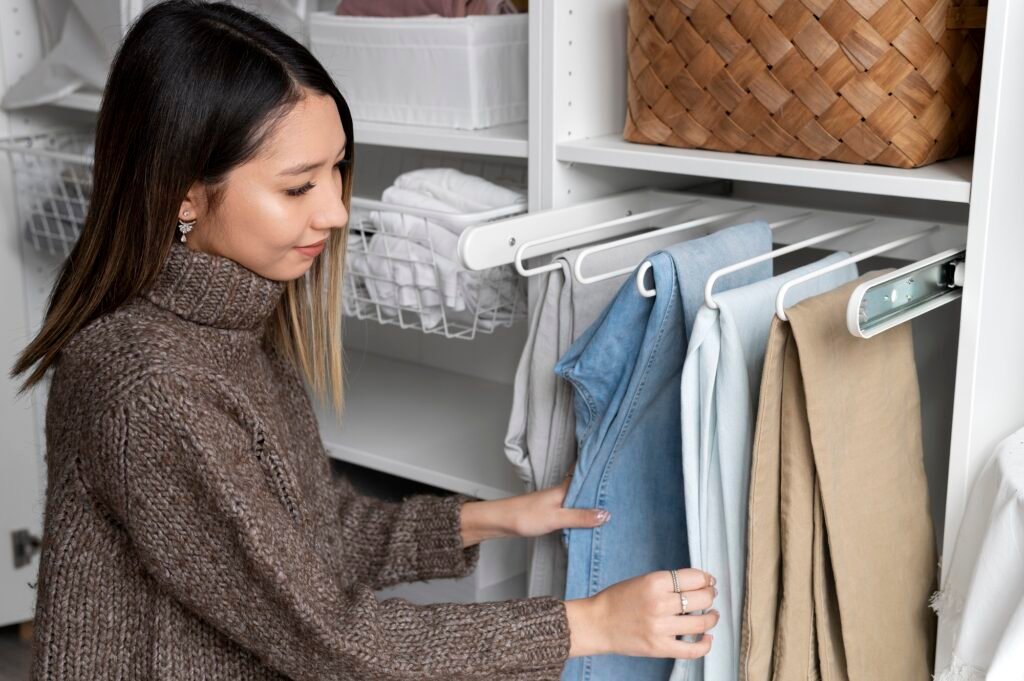
- Double Hanging Rods: Add a second rod to double your hanging space, ideal for shirts, blouses, and other shorter garments.
- Limit by Season: Keep only the current season’s clothing in your main closet.
These strategies keep your wardrobe neat and your tiny home feeling open.
Utilizing Vertical Space: Shelving and Hooks
In a tiny home, walls are prime real estate. Here’s how to use them:
- Wall Shelves: Mount shelves for books, decor, or folded clothes. Choose a slim, light design so they don’t crowd the room (and keep weight in mind if your home is on wheels).
- Pegboards: Hang hats, scarves, and jewelry on a pegboard that you can rearrange as your needs change.
- Floating Hooks: Use hooks for bags, coats, and even shoes, placed where they won’t get in the way.
- Ceiling and Loft Storage: Use overhead shelves or loft edges for items you rarely need.
Going vertical keeps your tiny home organized and frees up floor space for living.
Multi-Functional Furniture: Making the Most of Every Piece
In a tiny home, furniture that does double duty is essential:
- Storage Beds: Choose a bed with built-in drawers or compartments for clothes, shoes, or linens.
- Storage Ottomans: An ottoman can hold blankets, pillows, or off-season clothing while doubling as extra seating.
- Convertible Desks and Tables: A fold-away desk or a table that converts for dining makes the most of a small living area.
- Stair Storage: If your tiny home has a loft, stairs with built-in drawers or cabinets turn dead space into useful storage.
Multi-functional pieces make your home more versatile without sacrificing comfort or style.
Seasonal Storage: Keeping Your Tiny Home Clutter-Free
Seasonal changes call for a flexible storage plan:
- Vacuum-Seal Bags: Compress off-season clothing and bedding to free up space. Skip vacuum sealing for leather loafers and structured or embellished garments, since compression can damage them.
- Rotating Wardrobe: Store out-of-season clothes in under-bed containers or high shelves, and swap them as the seasons change.
- Seasonal Decor Storage: Keep holiday decorations and similar items in labeled bins in a designated spot.
Planning ahead keeps your tiny home organized all year.
Conclusion: Embracing an Organized and Functional Tiny Home
Making the most of a tiny home takes creativity, planning, and commitment. By assessing your space, prioritizing your needs, and putting these tips to work, you can turn a small footprint into a functional, inviting home.
Organization is an ongoing process. Reassess your storage regularly and adjust as your belongings or lifestyle change, and your tiny home will stay clutter-free and enjoyable.
How to Organize Shoes, Bags, and Clothes in a Tiny Home Potential | OutFactors – Dallas Fort Worth, TX