10 Modern Property Renovation Ideas Using Geometric Tiles
10 Modern Property Renovation Ideas Using Geometric Tiles
Modern Property Renovation Ideas Using Geometric Tiles
Quick Review
“If you’re renovating, want a detail that instantly makes a home feel smarter, sharper, and memorable? These 10 geometric tile ideas show how the right pattern can turn plain spaces into practical features that boost flow, character, and lasting appeal.”
Modern property renovation is no longer defined by budget alone. What buyers, homeowners, and developers notice first is whether a space feels considered, functional, and visually well resolved. That is why geometric tiles have become such a valuable design choice. They do more than dress a surface. They bring rhythm, sharpen lines, guide the eye, and add character without depending on excessive decoration.
When used with purpose, geometric tiles can solve a wide range of design problems. They can strengthen a compact entryway, sharpen a kitchen wall, break up flatness in a minimalist interior, or help define zones in an open-plan layout without adding physical barriers. In spaces that need more texture, 3D geometric tiles can also introduce depth and shadow in a way that feels architectural rather than decorative. Their real strength lies in precision, because shape, finish, grout, scale, and placement all affect the final result and the experience.
That is also why geometric tiles work best when they are treated as a design tool rather than a passing trend. The aim is not to add a pattern for its own sake, but to use geometry where it improves the room in a clear and practical way.
The ideas below follow that principle. Each one addresses a specific renovation challenge and demonstrates how geometric tiles can enhance both the appearance and performance of a modern property.
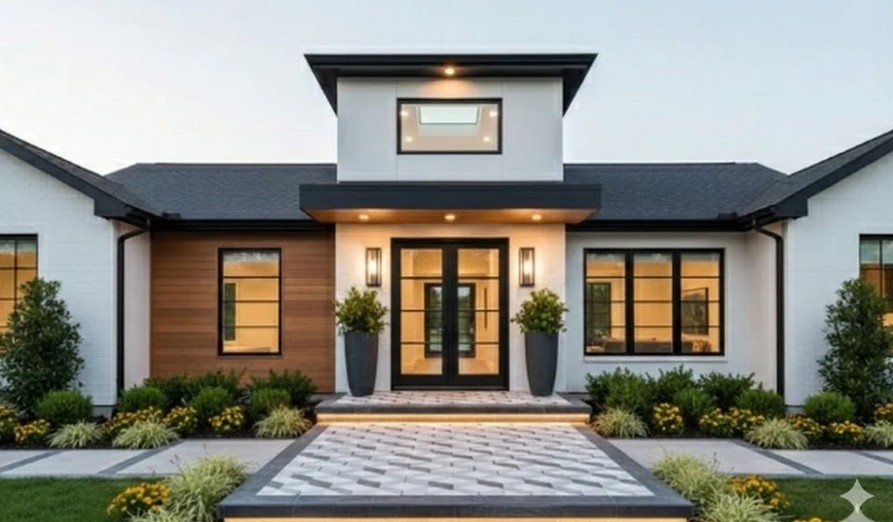
1. Use Large-Scale Geometric Floor Tiles to Give the Entryway More Presence
The entryway is often small, but it has an outsized effect on first impressions. When it feels unresolved, the whole property can seem less considered. A well-chosen geometric tile floor helps establish structure immediately and gives the entrance a stronger identity without adding clutter.
Large hexagons, elongated diamonds, and cube-effect porcelain tiles tend to work especially well here because they bring order while standing up to daily traffic. In compact foyers, medium- or large-format tiles are usually more effective than small mosaics. Smaller patterns can make the floor feel fussy, especially near the threshold where shoes, bags, and outdoor dirt already create visual noise. Larger shapes usually read more clearly and make the space feel calmer.
Material choice matters. Matte porcelain is often the most practical option because it is durable, easy to clean, and better at disguising dust, footprints, and light scuffing than a glossy finish. Grout deserves the same attention. A grout tone close to the tile color gives a more seamless result and is usually the safer choice for wider appeal.
Contrasting grout can work in a sharper monochrome scheme, but it also makes every tile edge more noticeable, which can feel harsh in a narrow entrance. For resale-focused renovations, restrained shades such as warm grey, greige, charcoal, or soft off-white usually offer the best balance of character and flexibility.
2. Replace a Basic Kitchen Backsplash With a Geometric Feature That Earns Its Place
A kitchen does not always need new cabinets to feel updated. In many properties, the layout already works, but the room lacks definition. A geometric backsplash is one of the most efficient ways to shift that, because it changes the focal wall without the cost of a full kitchen replacement.
This works best when the cabinetry is relatively simple. Flat-panel doors, integrated handles, and quiet joinery allow more angular tile shapes to stand out cleanly. Chevrons, elongated hexagons, triangles, and other linear forms can add edge and direction to the wall behind the hob or prep area. If the cabinets already have strong grain, bold color, or heavily veined worktops, the tile should be more restrained so the surfaces do not compete. If the rest of the kitchen is minimal, the backsplash can carry more character.
Practical performance matters just as much as visual impact in this location. Glazed ceramic or porcelain is usually the easiest option to maintain, especially in high-splash zones behind the cooktop. Deeply textured tiles may look attractive in a sample, but they can be harder to wipe clean if grease settles into relief lines.
For that reason, many successful kitchen renovations use a geometric pattern with a smooth or lightly textured finish rather than aggressive surface texture. This is also one of the best places to spend slightly more on tile. Because the coverage area is limited, a better product can be specified without pushing the overall renovation budget too far.
3. Use One Full-Height Geometric Bathroom Wall to Break Up Sameness
Bathrooms often include expensive fittings and still feel ordinary because every surface is treated in the same predictable way. A full-height geometric feature wall changes that. It gives the room a focal point, introduces structure, and adds interest without forcing pattern onto every wall.
The most effective placement is usually behind the vanity, across the main shower wall, or behind a freestanding bath. These are the surfaces the eye naturally lands on, so the geometric treatment feels deliberate rather than scattered. In smaller bathrooms, simpler shapes usually work better. Tonal hexagons, soft diamonds, or shallow relief patterns can add interest without making the room feel fragmented. In larger bathrooms, stronger contrast or a bolder motif can work because there is more visual space to absorb it.
Scale is especially important in wet rooms. Small-format geometric tiles on every wall can create too many grout joints and too much visual interruption. That can make a compact bathroom feel tighter and increase cleaning effort over time. Medium or larger formats are often the better choice when the goal is a cleaner, calmer finish. Pairing one tiled feature wall with quieter surrounding surfaces also keeps the design focused. The bathroom feels more considered, but it does not become visually crowded.
4. Define Open-Plan Zones With Geometric Flooring Instead of Adding Dividers
Open-plan layouts remain popular, but they can easily become visually loose when every area uses the same floor finish. Geometric tiles offer a cleaner way to define function without chopping the room into disconnected pieces.
This approach works particularly well under kitchen islands, dining zones, breakfast areas, and work corners. A geometric tile field can define the active part of the room, while timber, polished concrete, or microcement extends into the lounging zone. The benefit is not only visual. It also improves the room’s functionality by installing a more durable, wipeable surface in areas most exposed to spills, dropped food, chair movement, and heavy foot traffic.
Transition detailing makes a real difference here. One reason hexagonal layouts are so effective is that their broken edge creates a softer handover into timber than a straight threshold line. The result feels more integrated and less abrupt. The main caution is the scale of impact. In open-plan spaces, the tile should organize the layout, not dominate it. Clear geometry in muted tones usually works better than highly contrasted patterns in large shared areas because it can hold the zone visually without overwhelming the rest of the interior.
5. Add Depth With Three-Dimensional Geometric Tiles Where Styling Is Minimal
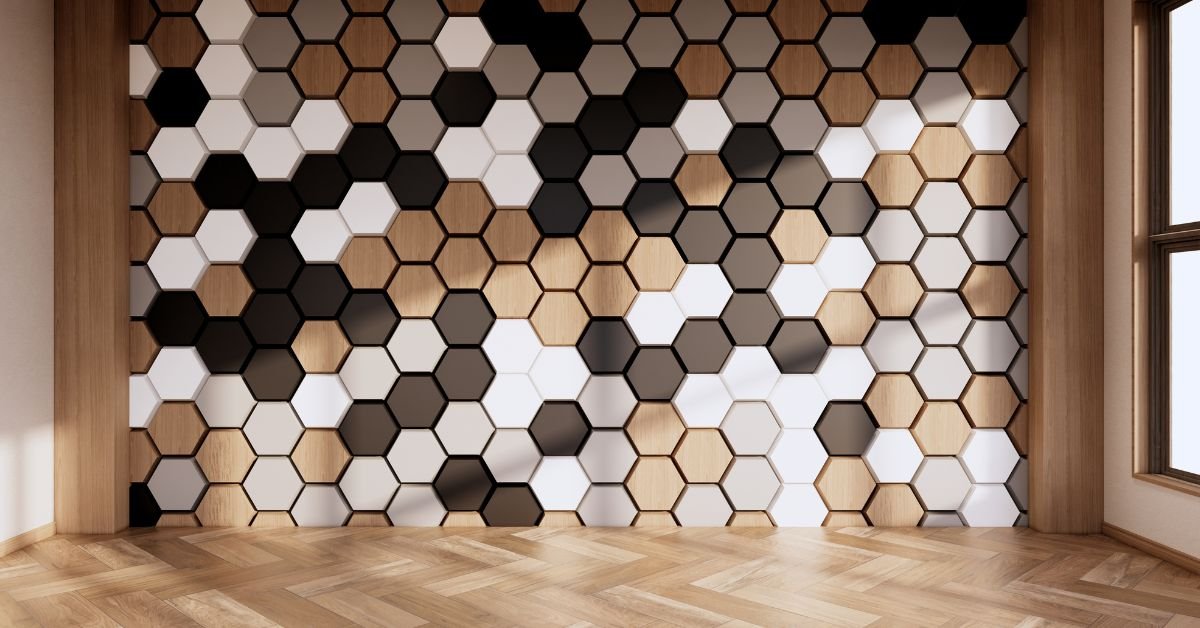
Some rooms feel unfinished, not because they need more furniture, but because the surfaces are too flat. Three-dimensional geometric tiles solve that by adding relief, shadow, and variation across the wall itself. They are especially useful in minimalist interiors where decorative accessories are kept to a minimum.
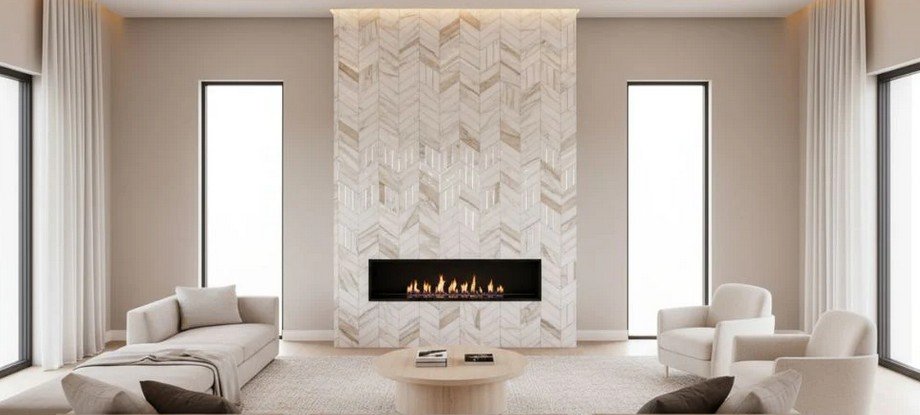
They work best in places that benefit from texture but do not need constant scrubbing, such as a bedroom feature wall, a dining area backdrop, a fireplace surround, or a powder room focal wall. Lighter shades such as matte white, mineral beige, chalky stone, or muted sand are particularly effective because natural and artificial light can move across the surface and make the geometry more visible throughout the day. Darker versions can work as well, but the effect is usually heavier and more atmospheric.
Lighting determines whether this idea succeeds. A relief tile wall in flat lighting can look far less effective than expected. Directional downlights, wall washers, or concealed LED strips usually reveal the form properly and help the pattern read from a distance. Placement also needs discipline. These tiles are often more expensive than flat ceramics, and their surface is less practical in hard-cleaning zones. Used in a single focused area, they add texture and finish without causing maintenance problems or visual fatigue.
6. Use Geometric Tile Risers to Make the Staircase Work Harder Visually
Staircases are highly visible, but in many renovations, they receive the most basic finish treatment. Tiled risers are a relatively contained upgrade that can give the staircase far more presence without altering its structure.
This is one area where repetition matters more than complexity. Patterns need to remain readable across a full flight. Small diamonds, stepped motifs, compact hexagons, and cube-style designs usually work well because they hold their form when seen from above, below, and in motion. Overly intricate patterns often lose clarity once repeated across multiple risers.
Material pairing is just as important. Timber treads with geometric tile risers are among the most reliable combinations because the timber softens the tile’s graphic quality. Porcelain is usually the safer choice in busy homes because it resists knocks better than softer ceramic bodies. Before committing, it is worth checking how the pattern looks across the entire stair run, not just on a single sample piece. A design that looks attractive in isolation can feel too restless when multiplied. The strongest staircase schemes usually rely on clear repetition, limited color variation, and surfaces that will still look sharp after daily use.
7. Continue Geometric Tile Language Into Outdoor Areas to Improve Flow
One of the most effective moves in modern renovation is creating a stronger relationship between indoor and outdoor living spaces. Geometric tiles can help do that by carrying a shared visual language from inside to outside, even when the technical tile specification changes.
The most successful approach is usually coordination rather than exact duplication. An indoor geometric porcelain floor might continue to a patio or balcony in a related pattern family, but with an external-grade finish that provides better slip resistance and weather performance. That keeps the design connected while respecting the demands of outdoor use. Exterior tiles need to handle moisture, temperature changes, and surface grip much more reliably than interior wall or floor finishes.
This strategy is especially useful in compact homes because it can make the inside and outside feel more connected. When the eye reads both zones as part of one design story, the property often feels broader and more resolved. It also adds practical value. A consistent tile language helps outdoor areas feel planned rather than added later, which strengthens the overall impression of quality.
8. Choose Monochrome Geometric Tiles When Longevity Matters More Than Drama
Not every renovation benefits from strong color. In many homes, especially those being updated for long-term use or future resale, the better choice is to rely on shape and contrast rather than trend-led palettes. Monochrome geometric tiles are particularly effective here because they offer definition without tying the room to a short-lived color direction.
Black and white is the most graphic version, but softer combinations are often easier to live with. Warm white and pale greige, ash grey and charcoal, or bone and taupe can all deliver the same geometric clarity with less visual severity. These combinations sit more comfortably alongside timber, brushed nickel, marble-look surfaces, and matte black fixtures, which makes the room easier to refresh later without replacing the tile.
This is one reason monochrome geometry works so well in powder rooms, en-suites, laundry areas, and a kitchen backsplash. It adds identity while still leaving room for future changes to paint, hardware, mirrors, or lighting. The key is to let the tile carry the graphic interest and keep surrounding choices straightforward. When too many strong details compete in the same room, the geometry loses its effect. When handled more simply, it tends to age much better.
9. Use Color-Blocked Geometric Panels to Introduce Personality Without Committing the Whole Room
Color can make a renovation memorable, but using it across an entire room can be risky. A more controlled approach is to confine color to one geometric tile panel or feature zone. That gives the room personality without making it difficult to update later.
This method works well in alcoves, vanity backdrops, breakfast corners, utility areas, bar niches, and other compact spaces where a single, focused move can have a real impact. Instead of turning every wall into a feature, the room gets one clear focal area. Geometric structure also helps color feel more disciplined. Shades such as terracotta, forest green, slate blue, muted ochre, clay, or sand usually look more grounded when they are organized through a clear repeating form.
To keep the result current, surrounding finishes should stay relatively quiet. Natural oak, warm plaster tones, concrete-look surfaces, and off-white cabinetry are all effective companions because they allow the colored panel to stand out without forcing the whole room into a theme. Saturation matters too. Earthier, toned-down colors generally hold up better over time than bright primaries, especially in renovation projects where flexibility matters. That makes color-blocked geometry a useful middle ground between a fully neutral scheme and a room that feels too trend-driven.
10. Pair Geometric Tiles With Raw Materials to Create Better Contrast Across the Room
The most convincing renovations rarely depend on a single standout material. They work because different surfaces play different roles. Geometric tiles become far more effective when they are balanced by quieter, tactile materials such as oak, walnut, microcement, limestone-look porcelain, brushed brass, blackened steel, or fluted glass.
This contrast is what gives the room depth. A geometric tile floor can add rhythm beneath plain timber cabinetry. A faceted backsplash can sharpen the softer visual weight of honed stone worktops. In bathrooms, geometric wall tiles next to timber joinery and warmer metal finishes help the room feel more layered and less sterile than standard white tiling alone. Even concrete-look surfaces benefit from this relationship because geometry introduces structure into what might otherwise feel like one continuous flat plane.
This kind of material balance also prevents a common mistake: relying on patterns everywhere. Geometric tiles are usually strongest when they hold one clear role in the room, while surrounding materials provide calm, warmth, or texture. That separation makes the design easier to read and usually produces a more refined result. The room does not need every surface to compete. It needs each surface to contribute something different.
Conclusion: Geometric Tiles are a Smarter Way to Renovate
Geometric tiles have become one of the most useful tools in modern property renovation because they solve practical and visual problems at the same time. They can strengthen an entryway, sharpen a kitchen, give a bathroom a clearer focal point, define open-plan zones, and bring texture to areas that would otherwise feel flat. Few materials can offer that range of impact across so many parts of a property.
Their real value comes from deliberate use. Large-format floor tiles can settle a compact entrance. A backsplash can modernize a kitchen without replacing the cabinetry. One full-height bathroom wall can introduce structure without crowding the room. Zoned flooring can separate functions without closing off space. Relief tiles can add depth where furniture and styling are kept minimal. Stair risers can turn a basic circulation element into a feature. Coordinated indoor-outdoor geometry can improve flow. Monochrome schemes can hold up over time. Color-blocked panels can add character without taking over the room. Pairing geometry with raw materials can make the whole interior feel more balanced.
That is why geometric tiles continue to perform so well in renovation work. When chosen with care, they do more than add pattern. They improve clarity, durability, visual structure, and the overall finish of a space. For readers, homeowners, and buyers, that is what makes them valuable: not just decoration, but a smarter way to renovate.
10 Modern Property Renovation Ideas Using Geometric Tiles | OutFactors – Dallas Fort Worth, TX